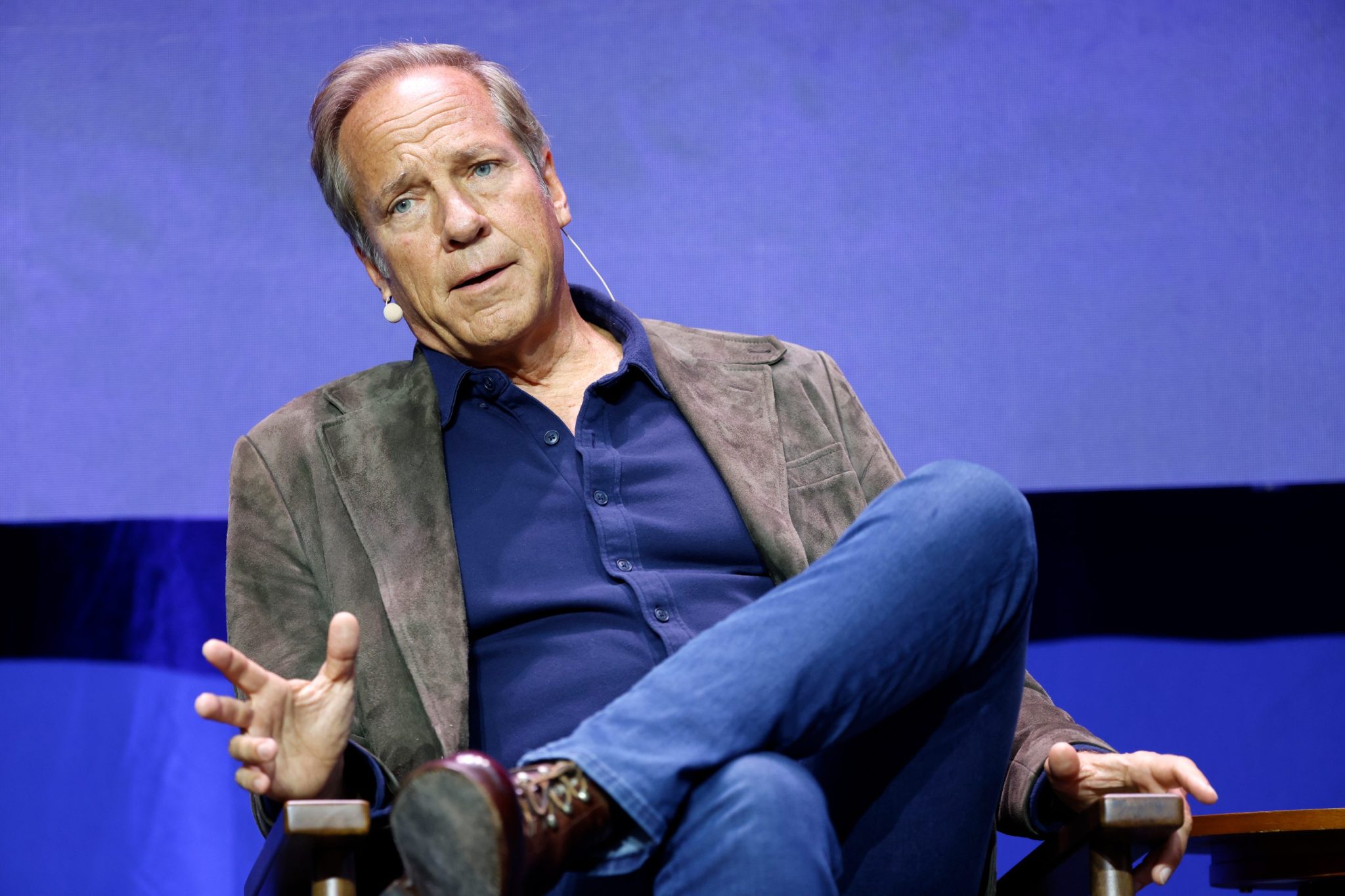
Mike Rowe provided a blunt strategy to describe America’s skilled-worker scarcity: the nation is shedding tradespeople quicker than it’s changing them.
“For each 5 tradespeople who retire this yr, two substitute them,” Rowe stated throughout a Ford Professional Speed up panel on workforce growth. “5 out, two in. I don’t care the way you vote. I don’t care what your politics are. Math doesn’t care both.”
The host of Soiled Jobs has made variations of that argument for years. However at Ford’s gathering, Rowe’s warning about welders, electricians, and different expert staff grew to become the opening to a extra expansive dialog with Training Secretary Linda McMahon and Michael Duffy, Below Secretary for Acquisition and Sustainment, US. Division of Conflict, about what the nation will get improper when it treats school and profession coaching as opposing paths.
The rising argument was not merely that People want extra folks within the trades. It was that the language of “blue collar” and “white collar” might now not describe the roles employers want stuffed—or the schooling staff have to navigate them. Attempt “purple,” Rowe stated.
The arithmetic of a shrinking workforce
Rowe argued the skilled-labor scarcity has turn into tough to dismiss as a routine hiring problem. The scarcity, he stated, is “actual,” “large,” “getting wider,” and “harmful.”
That’s partly a query of demographics. Extra skilled tradespeople are retiring, whereas fewer younger staff are coming into fields comparable to welding, electrical work, plumbing, superior manufacturing, and industrial upkeep.
“How lengthy do you wish to wait to your rest room to get fastened?” he stated. “How lengthy do you wish to anticipate the lights to return again on whenever you flip the swap?”
The hole additionally more and more reaches into manufacturing and nationwide protection. Rowe cited the submarine-industrial base as an illustration of the issue, describing shortages of welders and electricians at a time when the US is attempting to broaden manufacturing capability.
Rowe stated he obtained a name in his capability as CEO of the mikeroweWORKS Basis from the BlueForge Alliance, which oversees 16,000 particular person corporations collectively charged with delivering nuclear-powered submarines. “These guys name me to say, ‘Hey, we’re having a hell of a time discovering welders and electricians. Are you able to assist?’ I say, ‘I don’t know. What number of do you want?’” And the quantity is huge: BlueForge says an estimated 100,000 staff in crucial manufacturing trades are wanted over the following 10 years for the next-generation submarine fleet.
When he was requested the place these future staff may very well be discovered, Rowe’s reply was: “They’re within the eighth grade.”
That’s the hassle, as Rowe sees it. Firms throughout the economic system—Ford and Normal Motors, big-box retailers, producers, and protection contractors—are competing for staff who will take years to develop. “You’ll be able to’t recruit out of the eighth grade,” he stated.
Linda McMahon’s reply
McMahon agreed with Rowe’s premise, however centered on the institutional adjustments wanted to construct a bigger pipeline. She stated the Training Division has been working with the Labor Division to extend emphasis on workforce coaching and velocity the route into expert jobs.
Her most popular mannequin begins earlier than commencement. Excessive faculties, she stated, ought to work extra intently with neighborhood schools, technical faculties, and vocational packages so college students can graduate with each a high-school diploma and a usable credential.
A pupil may start with electrical work, as an illustration, after which add credentials in HVAC or welding. The purpose is to permit younger folks to enter the workforce extra rapidly, keep away from pointless prices, and proceed accumulating abilities over time.
McMahon additionally urged faculties to introduce hands-on studying a lot earlier, together with digital welding and electronics packages that may make technical work really feel tangible and engaging to youthful college students.
However her sharpest level was directed at dad and mom and the standing hierarchy round larger schooling. Expert work, she argued, shouldn’t be described as what a pupil does when school didn’t work out.
“This isn’t simply, ‘Boy, my child actually wasn’t sensible sufficient to go to school, so I assume he’ll be an electrician or a plumber,’” McMahon stated.
A ‘purple’ workforce
Rowe pushed the dialog additional. The issue shouldn’t be merely that too many individuals steer college students away from the trades, he stated. It’s that the nation nonetheless imagines mental and sensible work as separate worlds.
He questioned the utility of the labels “blue collar” and “white collar,” notably in locations comparable to Detroit and his hometown of Baltimore, the place these identities are deeply embedded. Perhaps, he instructed, the following technology of labor has “a extra grey or purple hue.”
Rowe then held up his smartphone as an emblem of that change.
“Right here’s my liberal arts diploma,” he stated, arguing {that a} smartphone with an web connection provides anybody entry to “99% of the identified data.” He stated he had only in the near past watched a lecture from MIT totally free from a lodge room.
His level was not that schooling is out of date. It was that mental ambition is now not confined to a campus, or to the scholars who take a standard tutorial route. Nor ought to folks with elite levels be insulated from the worth of studying a bodily commerce, he argued.
Recalling the political line that America wants “fewer philosophers and extra welders,” Rowe provided his personal model: “Our nation wants extra philosophers who can run a fair bead and extra welders who can speak intelligently concerning the Stoics and suppose critically,” he stated.
The brand new industrial combine
Duffy tied that argument to the altering nature of producing and protection. Newer corporations within the defense-industrial base, he stated, are combining expertise and manufacturing in methods that don’t match older workforce classes.
The necessity, he stated, is for folks with abilities moderately than a specific occupational label—and for “versatile factories and versatile workforce” able to responding to shifting industrial calls for.
That made Rowe’s demographic warning greater than a slogan about empty trade-school seats. The panel was actually arguing for a unique schooling hierarchy: one wherein the longer term welder could also be an autodidact with entry to MIT lectures, the longer term engineer might perceive the store flooring, and expert work is now not forged as the choice to an intellectually severe life.
The workforce of the longer term, Rowe instructed, is probably not blue collar or white collar. It might be purple.
For this story, Fortune journalists used generative AI as a analysis software. An editor verified the accuracy of the knowledge earlier than publishing.
Trending Merchandise

Nimo 15.6 FHD Pupil Laptop computer...

acer Chromebook 314 CB314-4H-C2UW L...

HP 14″ HD Laptop computer | A...

Acer Aspire 1 A115-32-C96U Slim Lap...

Lenovo IdeaPad 1 Scholar Laptop com...

HP 17.3″ FHD Enterprise Lapto...

HP 2024 Latest Laptop computer | 15...

HP Latest Pavilion 15.6″ HD T...

HP Stream 14″ HD BrightView L...

Lenovo V-Sequence V15 Enterprise La...